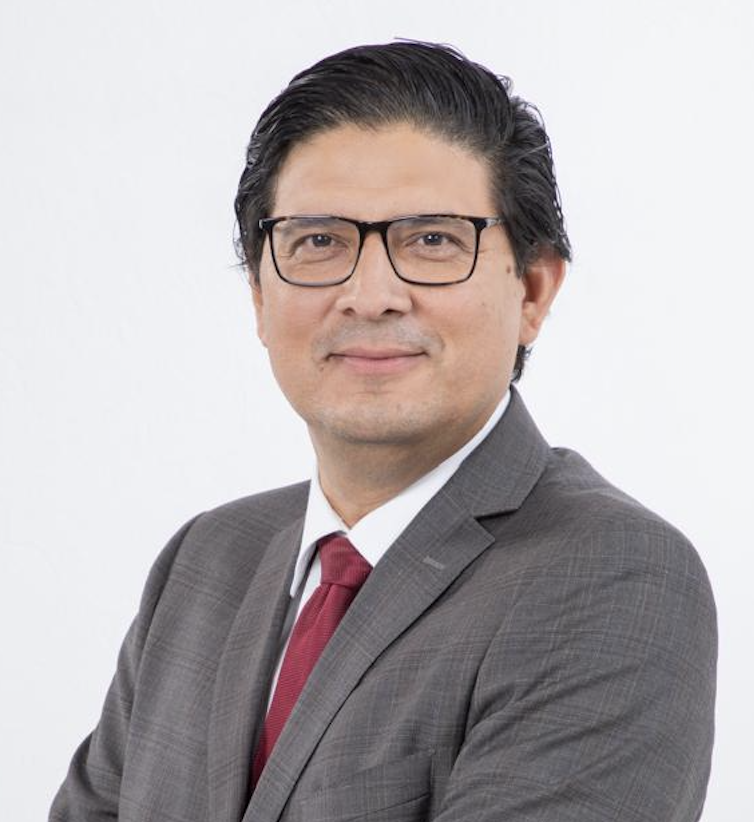
 Dr. Eduardo I. Ortiz-Rivera
Professor University of Puerto Rico at Mayagüez (UPRM)
Puerto Rico
Mathematical Modeling and Dynamic Analysis of DC Sources Useful for Grid-Forming Inverter Applications
- Tailored applicability in both power and renewable energy domains.
- Accurate emulation of FC, PV, or TEG curve profiles.
- Faithful replication of realistic constraints faced by FC, PV, or TEG systems.
- Valid for fundamental circuit analysis, encompassing GFMI control design and integration.
About Dr. Ortiz-Rivera
Dr. Eduardo I. Ortiz-Rivera, from Barranquitas, Puerto Rico, earned his BSEE (Magna Cum Laude) from the University of Puerto Rico-Mayagüez (UPRM) in 2000, and his MSEE and Ph.D. from Michigan State University in 2002 and 2006. He is a Tenure-Full-Professor in UPRM’s Department of Electrical and Computer Engineering, specializing in power electronics and control systems, with research spanning renewable energy, power systems, unmanned and aerospace vehicles, robotics, and engineering education. He leads the Minds2CREATE Research Team and has over 100 peer-reviewed publications. His group’s members have earned numerous honors, including 7 GEM Fellows, 7 NSF-GRFP Awardees, and 2 Best IEEE Paper Awards, with 12 former members earning Ph.D.s. He has been an IEEE member since 1997 (Senior Member).
At UPRM, he directs the SPEAR Laboratory (since 2008) and has served in roles including researcher/coordinator for the U.S. DoE NNSA CHRES consortium and coordinator of the new Electrical Engineering Doctoral Program. He created several courses in photovoltaics, power electronics, and alternative power generation, and has mentored more than 100 undergraduates across 50+ research projects, graduating 1 Ph.D. and 10 M.S. students.
His honors include the 2022 IEEE Women in Engineering “Extraordinary Man” award, multiple UPRM Outstanding Professor recognitions, and the National GEM and Alfred Sloan Fellowships. He has worked at institutions worldwide, including the Chinese Academy of Sciences, Fermilab, Argonne, and Sandia National Laboratories. ORCID: 0000-0003-1777-5980.
Dr. Juan Segundo-Ramírez
Professor University of San Luis Posotsí
México
Real-Time Simulation in Modern Power Systems: Conceptual Foundations, Industrial Implementation and Strategic Impact
The lecture will address real-time simulation not merely as a technological tool, but as a paradigm shift in the way modern power systems are researched, designed, and validated. From a conceptual and strategic perspective, it will discuss what real-time simulation truly is—and what it is not; its role as a bridge between mathematical modeling and industrial hardware; the difference between offline simulation and HIL/PHIL validation; its advantages in the development of protection, converters, and systems dominated by power electronics; as well as its current limitations and areas of opportunity.
I believe this perspective—integrating theoretical foundations, practical implementation with industrial equipment, and experience in advanced experimental validation—can offer a high-level technical and strategic vision aligned with the current challenges in power, electronics, and computing.
About Dr. Segundo-Ramírez
Dr. Segundo research focuses on the advanced modeling, stability analysis, control, and protection of converter-dominated power systems, addressing phenomena such as harmonic and electromagnetic stability, resonances, grid–converter interaction, small-signal analysis, bifurcations, and electromagnetic transient studies, with particular emphasis on transmission lines. His recent work centers on adaptive remedial action schemes, stability-boundary analysis in systems with high renewable penetration, grid-forming/grid-following converter integration, and digital twins for wide-area stability, protection, and control—developments validated experimentally under conditions representative of real operation. He has published more than 55 articles in prestigious international indexed journals and has led applied research projects funded by SECIHTI, in partnership with the mining industry, Schweitzer Engineering Laboratories, and national and international universities.
He is co-founder and Research Director of AZTEKNIA, and since 2011 has directed the Power Systems Laboratory, equipped with real-time digital simulation platforms (RTDS and OPAL-RT), reconfigurable power electronics, industrial digital relays, and HIL, CHIL, and PHIL capabilities. A member of Mexico’s National System of Researchers (SNII, Level I) since 2011 with a PRODEP profile, he has directed 8 doctoral, 20 master’s, and 4 undergraduate theses. He was also co-responsible for creating the Master’s in Power Systems in collaboration with Schweitzer Engineering Laboratories (SEL de México)—the first graduate program in Mexico structured in direct partnership with the power industry, and later the first offered online in this specialty—and has served as its academic coordinator, as well as coordinator of the graduate program in electrical engineering.
 Dra. Vlasta Bari
Associate Professor of Bioengineering at Department of Biomedical Sciences for Health, University of Milan
Italy
Cerebrovascular regulation: from signal acquisition to data analysis to the application in clinical scenarios.
About Dra. Bari
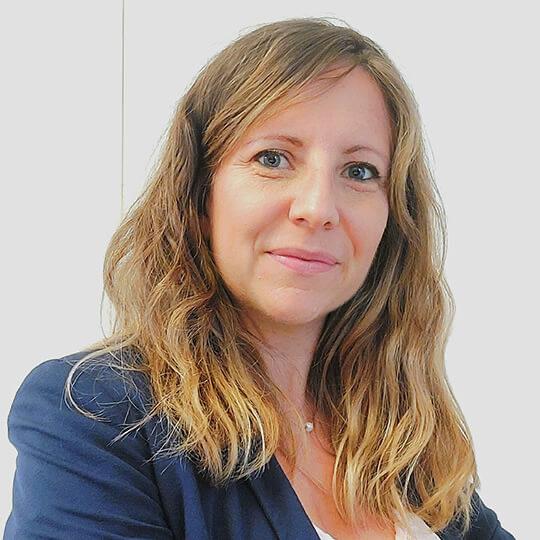
Vlasta Bari received her Master’s and Ph.D. degrees in Bioengineering from the Politecnico di Milano, Italy. Since 2025, she has been an Associate Professor of Bioengineering in the Department of Biomedical Sciences for Health at the University of Milan and is affiliated with the IRCCS Policlinico San Donato. Her research focuses on biomedical signal processing, autonomic variability, and cardiovascular and cerebrovascular control using multivariate time series analysis. She has authored over 80 published papers, is a member of the IEEE EMBS BSP and CSPE technical communities, and serves on the editorial boards of journals such as Physiological Measurement, Entropy, and Frontiers in Network Physiology.